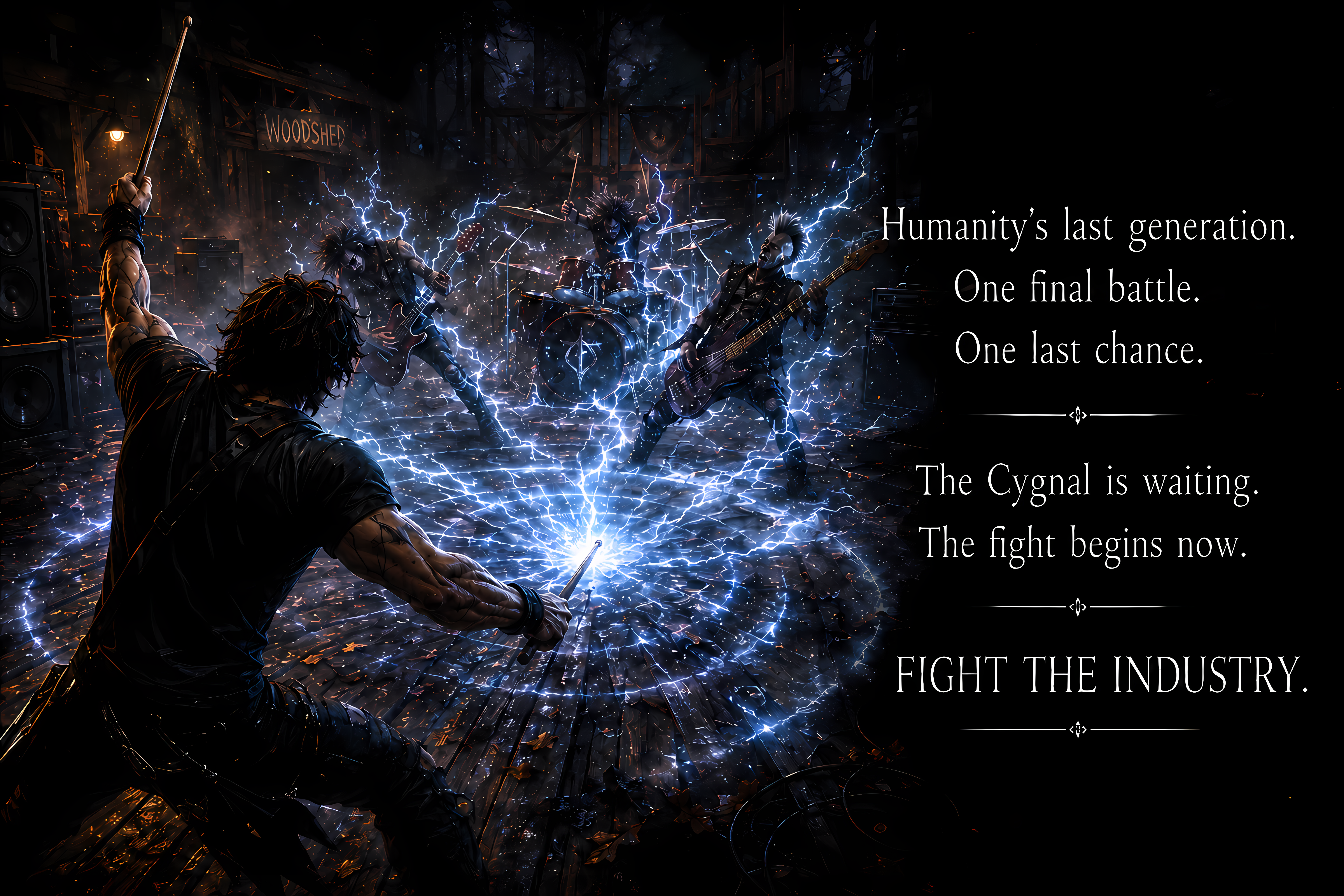
The Underground
You begin as a struggling musician rehearsing in your mom's garage. Your equipment is cheap. Your audience is nonexistent. Your bandmates have mostly quit.
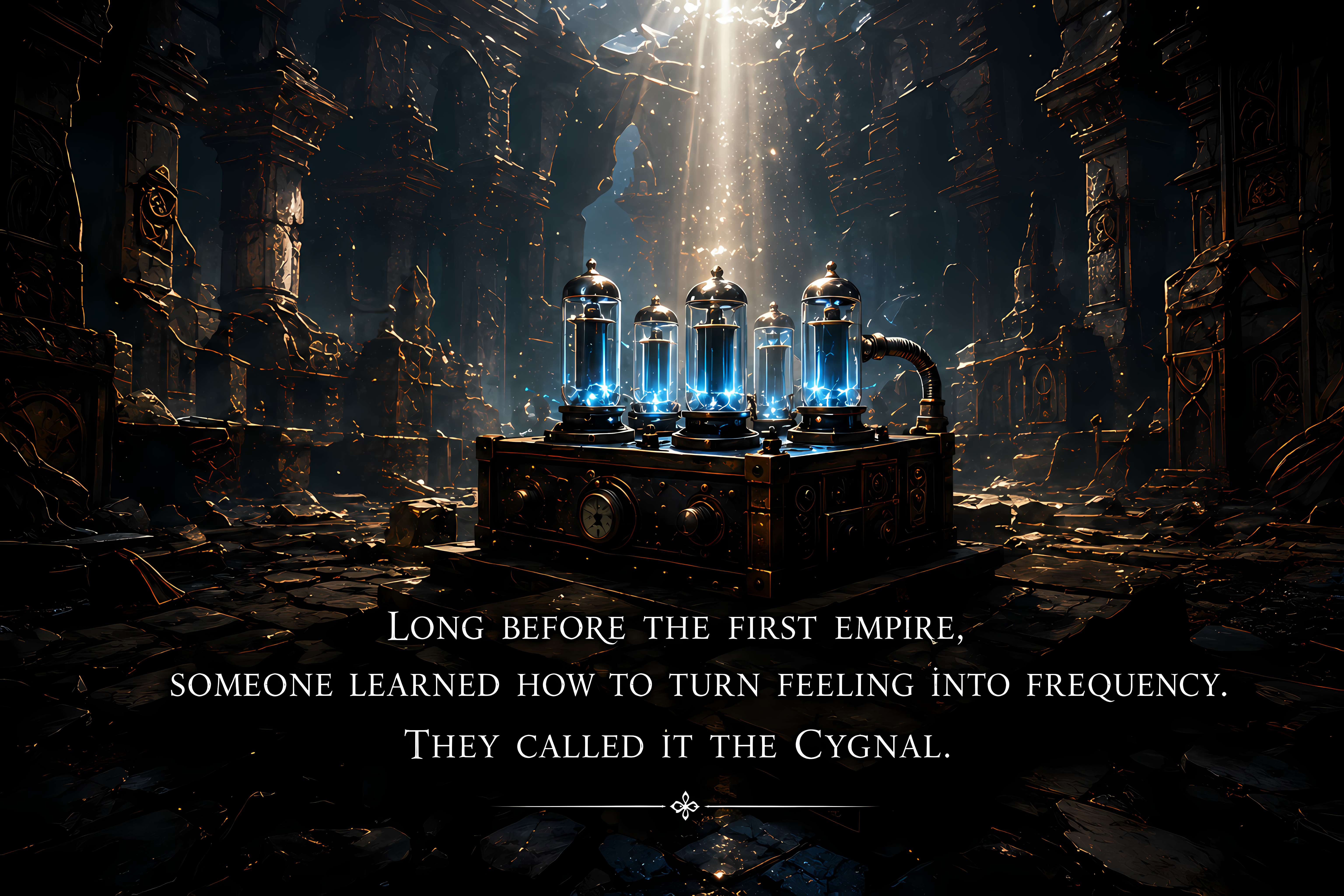
One night during practice, something strange happens. During an especially intense jam session, your performance releases a burst of real sonic force. Speakers vibrate violently. The walls shake. Your riffs literally knock objects across the room.
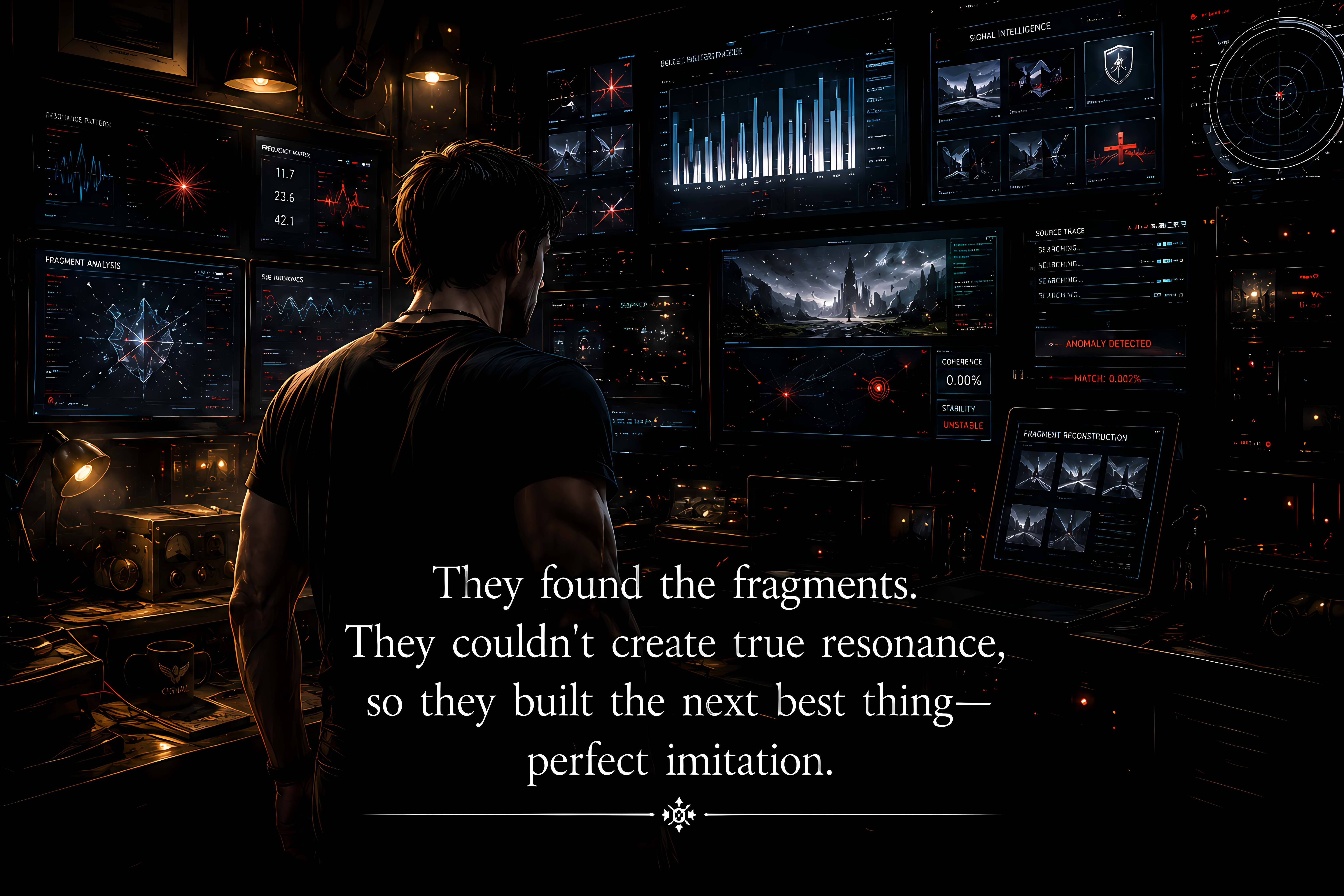
You have unknowingly tapped into the forgotten power of true music — the kind that used to shake buildings and start revolutions before anyone with a corner office decided it was bad for business.
Sir Don finds you before the echo fades. “Kid... what happened in this garage wasn't normal,” he tells you. “Most people hit a bad note and blow a speaker. You hit a chord and bent the room around you.”
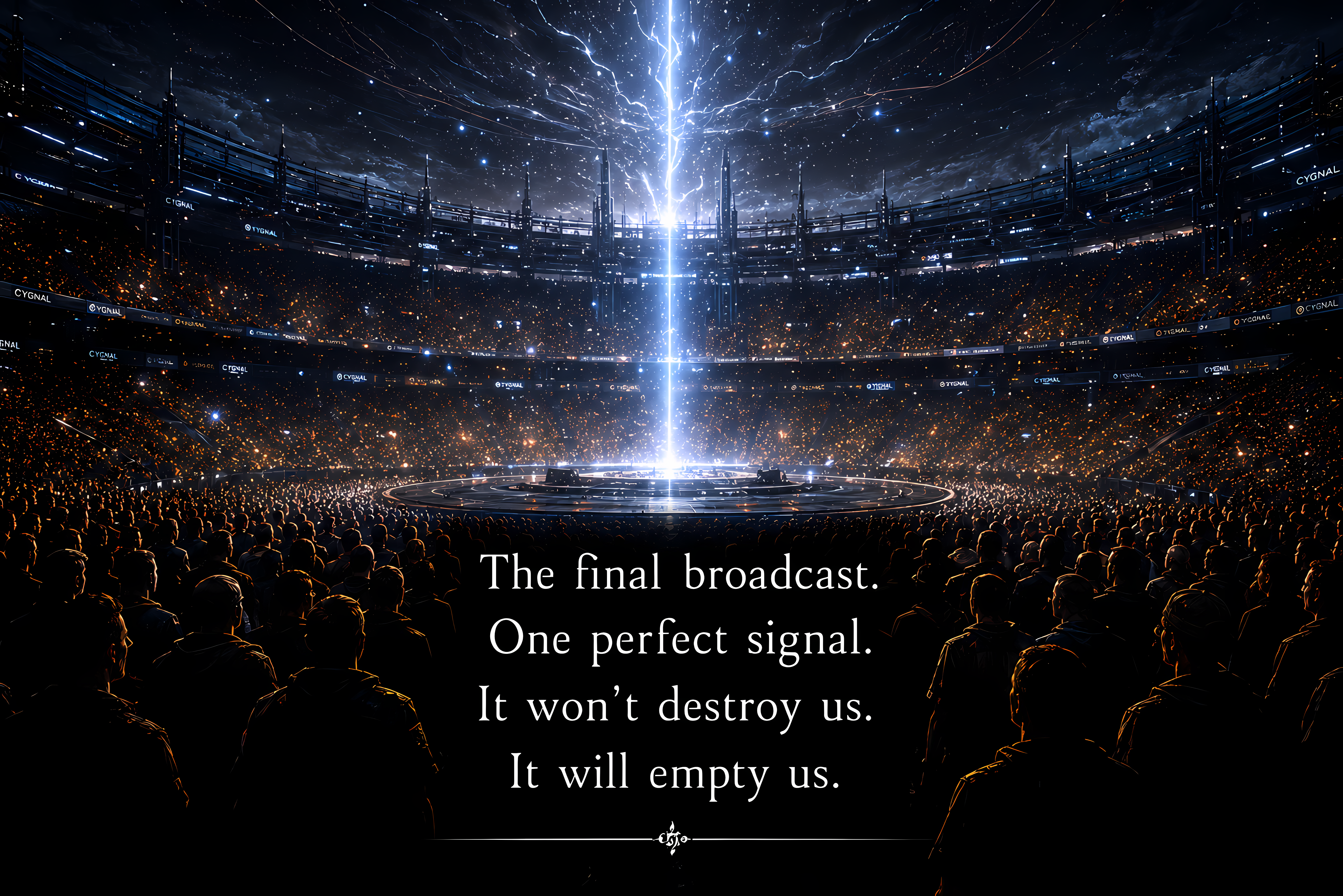
He lays out the truth in the same breath he uses to needle you: The Industry buried real music a long time ago, replaced it with focus-grouped hooks and dead-eyed algorithm slop, and buried anything with teeth. The world only remembers fake music because fake music owns every stage. That changes the moment someone loud enough kicks the door in.
Your first gig is waiting: The Rusty Nail, a local dive bar run by a pay-to-play promoter shaking down every band too desperate to say no. Sir Don doesn't dress it up. “Go in there, tear the place up, and remind them what live music feels like. This is where the revolution starts, kid. Don't blow it.”
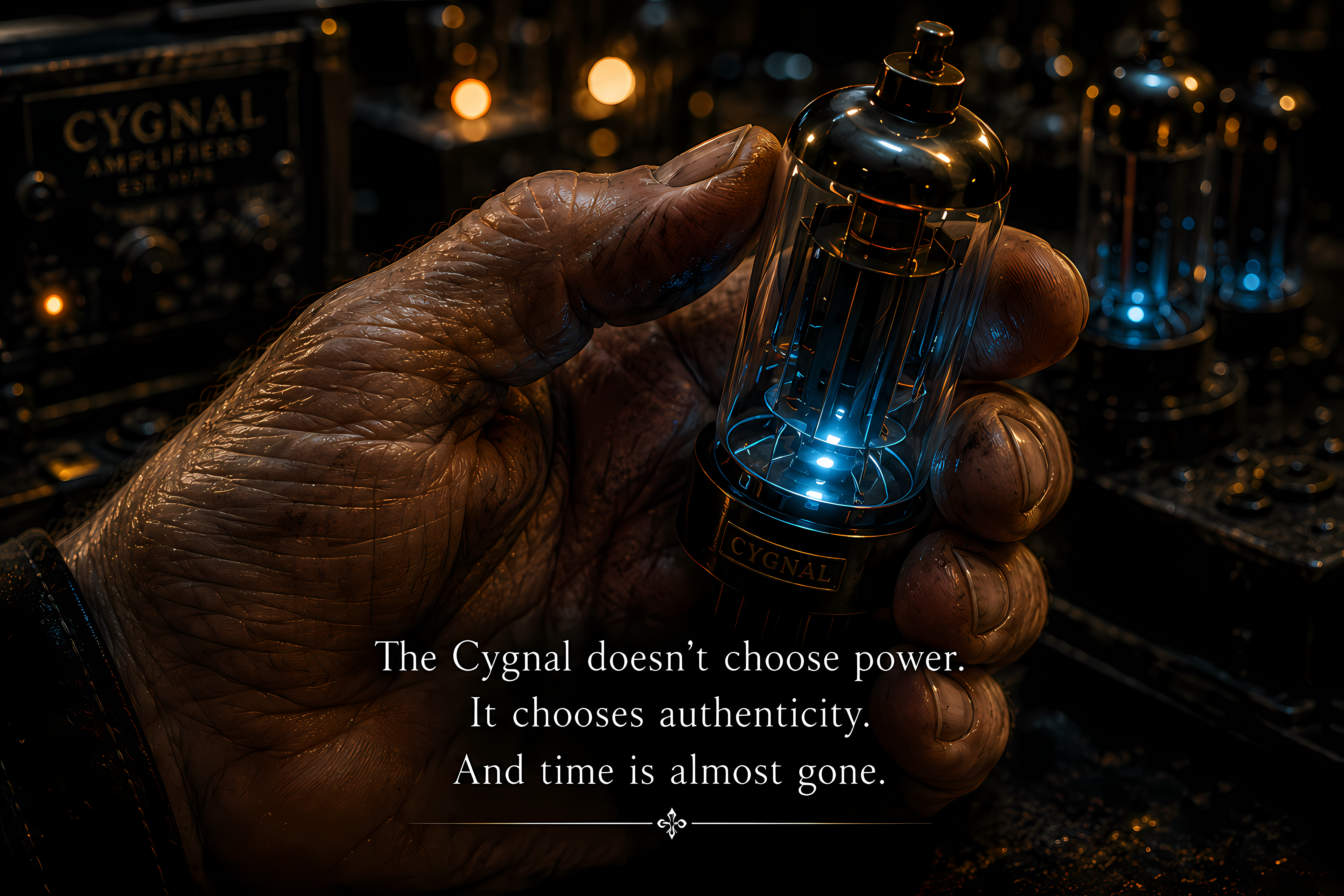
You clear the Rusty Nail. The promoter who profited off every band's desperation goes down, and for the first time, people are talking about a show that wasn't corporate karaoke. Word spreads. The underground forums lose their minds. You have a fanbase now — small, loud, and real.
Momentum is everything, Sir Don warns, and The Industry knows it too. Lose it, and the story gets scrubbed like it never happened. A backyard party is already lining up next: rival bands, a hostile crowd, and a stage where legends rise or get booed off the lawn.